 BusinessTech Academy
Santa Fe High School
BusinessTech Academy
Santa Fe High School
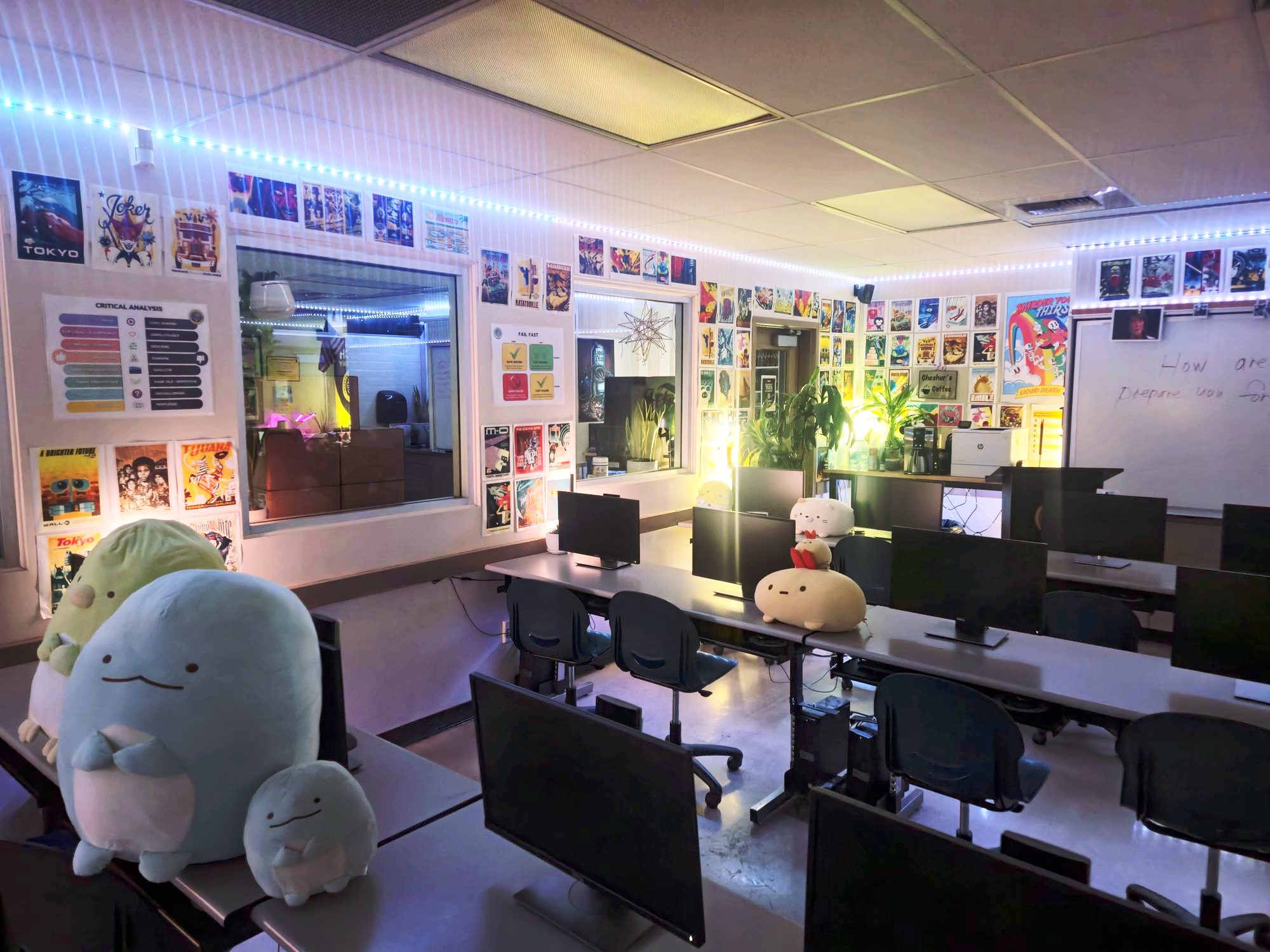
Every wall, covered
 Every unit is a project
We build professionals
Every unit is a project with a real audience. There are no tests. You work public data, defend a position at the table, and publish finished work under your own name.
How the room runs
Students, team and teacher overlap.
A traditional classroom is a one-way pipe. The teacher is the source of truth, information flows down, and the loop closes with a quiz. Record, remember, regurgitate. We draw the room the other way, and the drawing is on the wall.
You hold real roles. The teacher holds others. Where the circles meet is the team: researcher, evaluator, co-creator, debater, colleague, optimist. The cycle is inform, investigate, analyze, produce, and feedback runs in every direction, including at the teacher.
The room is co-created. Course direction, project choice and how the space runs are argued about openly, and change year to year.
How the Board works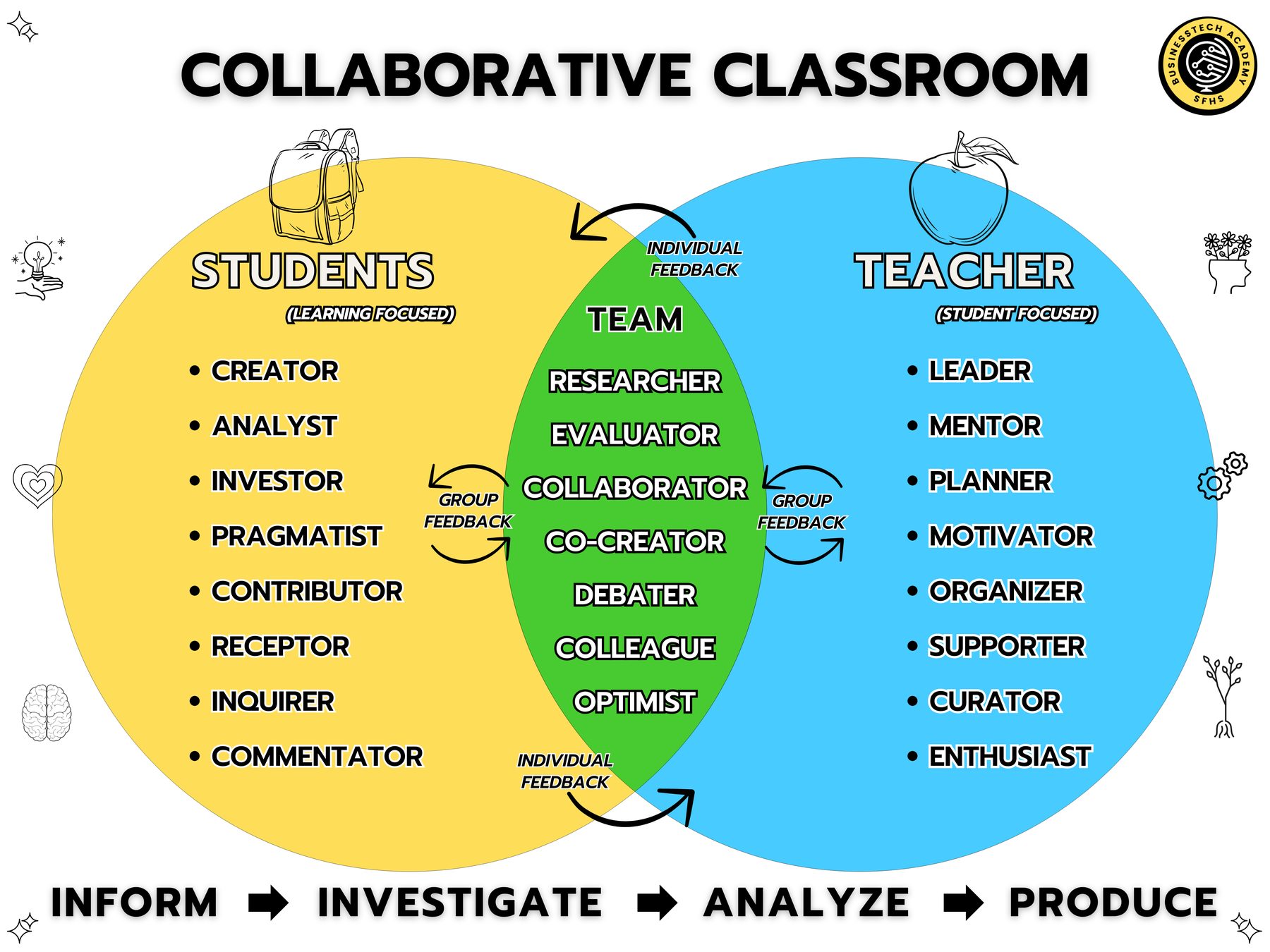
You have value here, and you are held to a real standard.
Both halves of that sentence are load-bearing. We start from what you bring and build on it. The bar the work clears is the one it would face outside this building.
Emotional literacy sits alongside the technical work in the course description, and that is deliberate. Teamwork, judgment and leadership are taught as skills, with the same seriousness as data analysis. Women’s leadership is a particular focus of the Academy.
A student told their contribution matters, then asked to defend it, becomes a professional faster than one only asked to comply.
What we hold
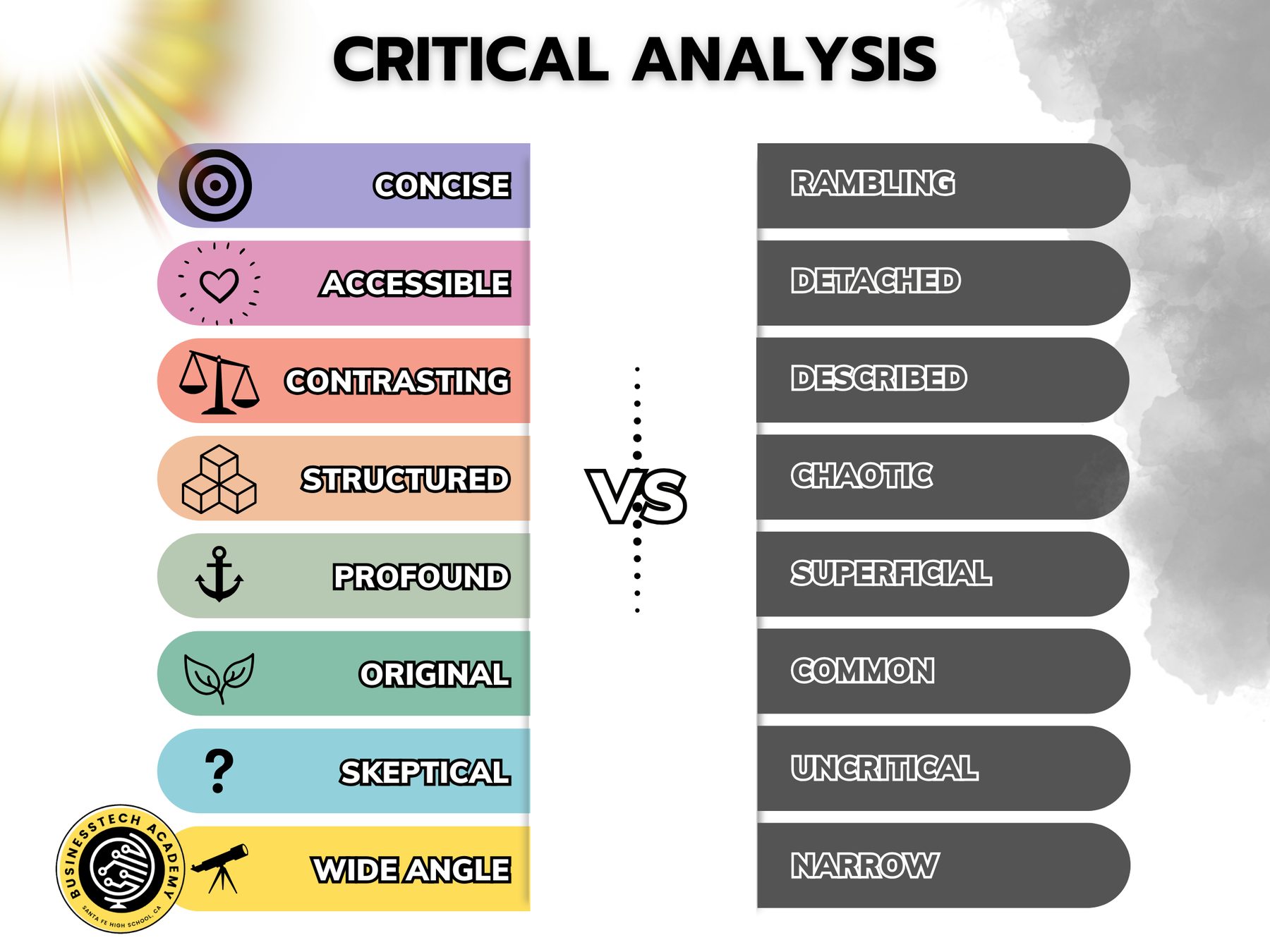
Eight qualities, each against the habit it replaces.
Critical thinking is named in the course description, so we teach it as a thing with parts and not as an attitude. Analysis here is expected to be concise, accessible, contrasting, structured, profound, original, skeptical and wide-angle. The slide names the weaker habit each one replaces, because the habit is what you start with.
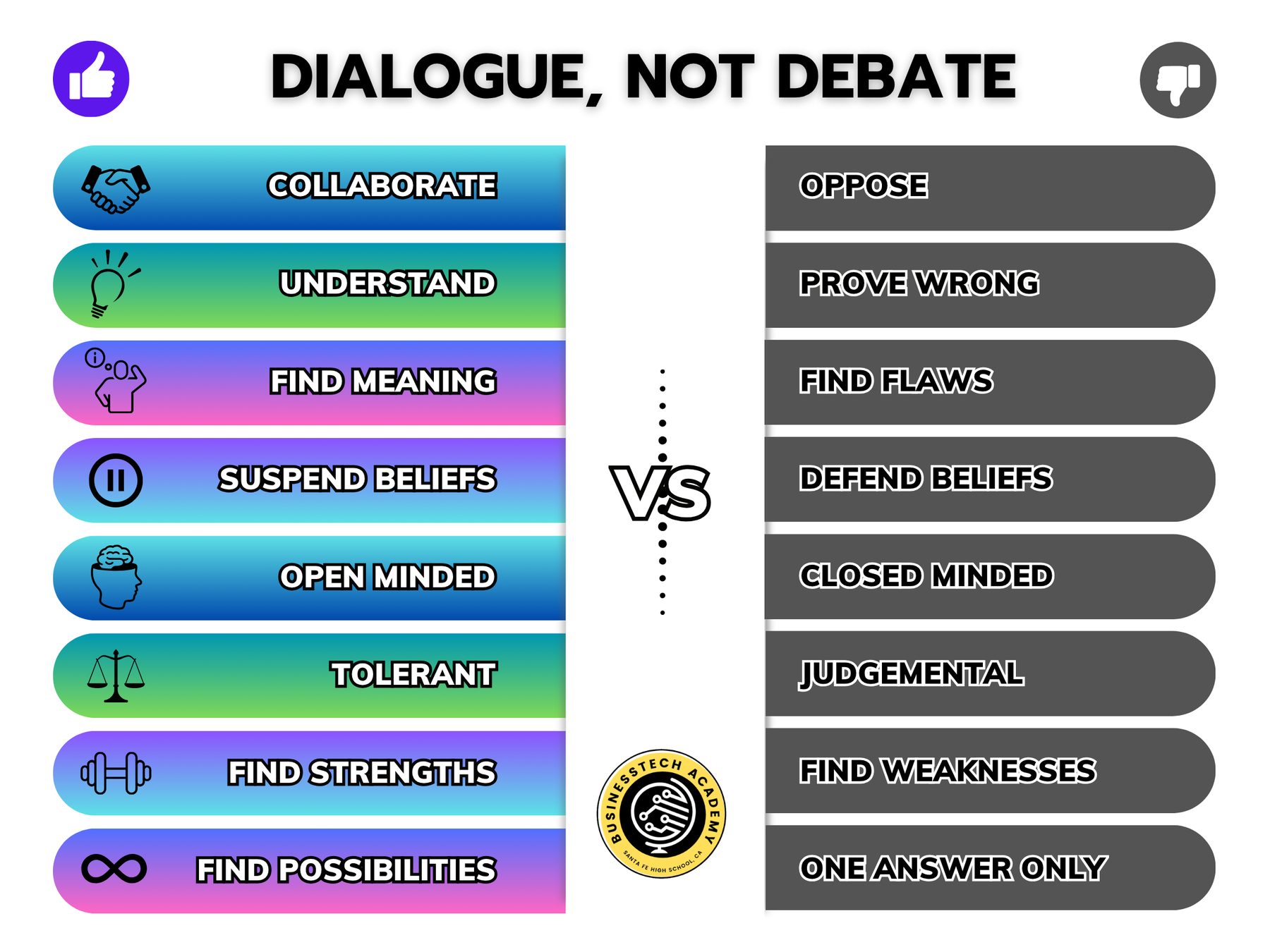
Tell data, facts, opinions and assumptions apart, and say which one you are holding.
Everyone speaks before anyone speaks twice.
Discussion runs on a protocol. The loudest voice has no standing here. You write your position down before you speak, take a role at the table (contributor, collaborator, debater, supporter), and the roles rotate every seminar, so nobody is permanently the one who talks and nobody is permanently the one who listens.
A quiet student does not get to disappear here, and does not have to fight for the floor. That is a rule.
How work is judged
There are no tests. There is work that has to hold up.
Project-based learning is not a technique we reach for on a good week. It is what the course is. The board-approved description of all three Information Systems courses says students discover the business world through project-based learning and case studies, so the project is the assessment. Nobody has sat a multiple-choice test here, and nobody will.
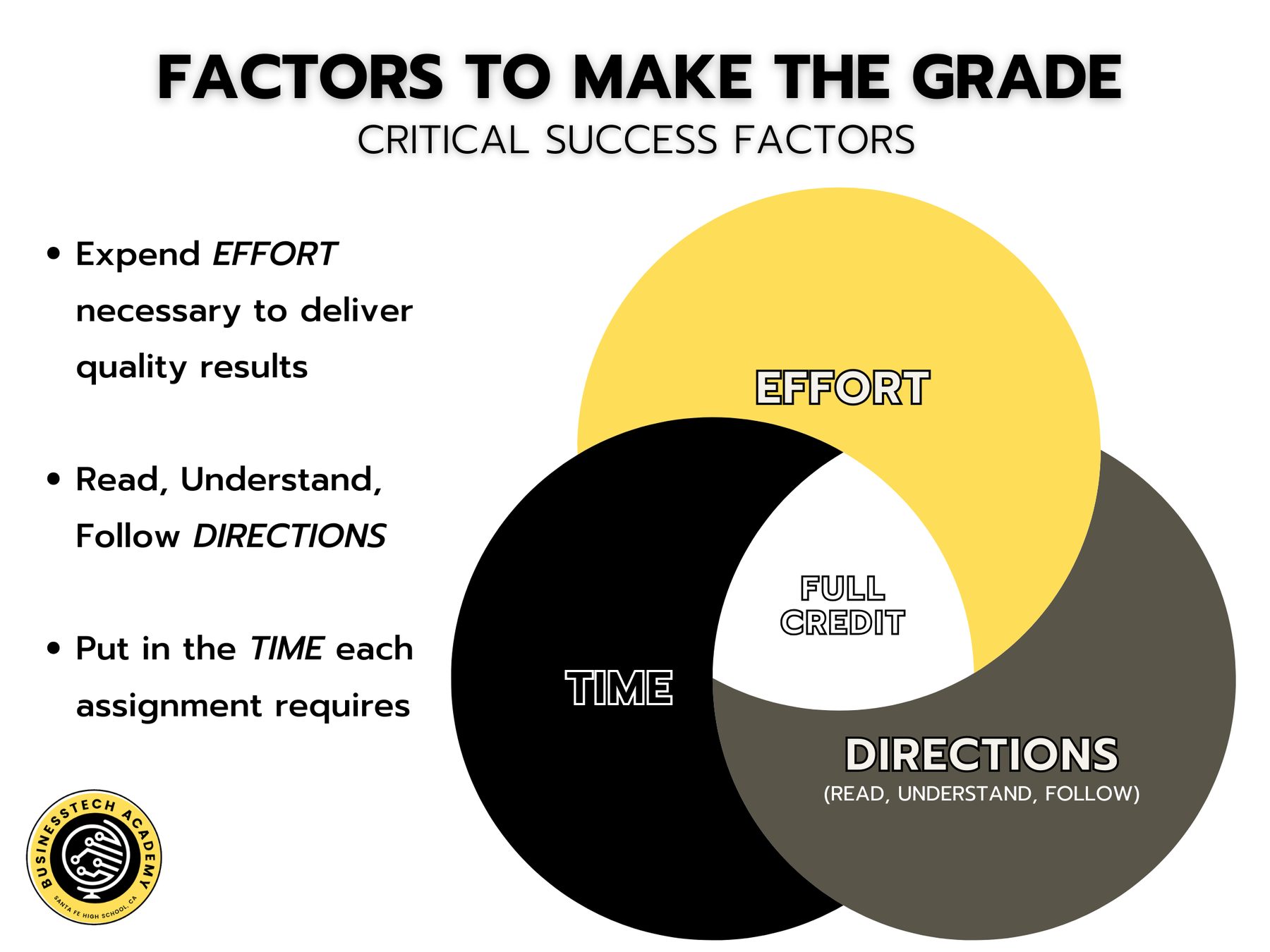
Fail fast. Slow failure is the only thing we do not accept.
Most assignments can be revised within one week of feedback and re-scored up to full credit, with a note on what changed and why. That is policy. It is how professionals work, and it only works if you find out early.
Finished work goes on this site with your name on it. Something that is going to be public gets a different level of care, and every student works that out within about two weeks.
Failure is information. Hiding it is the failure.
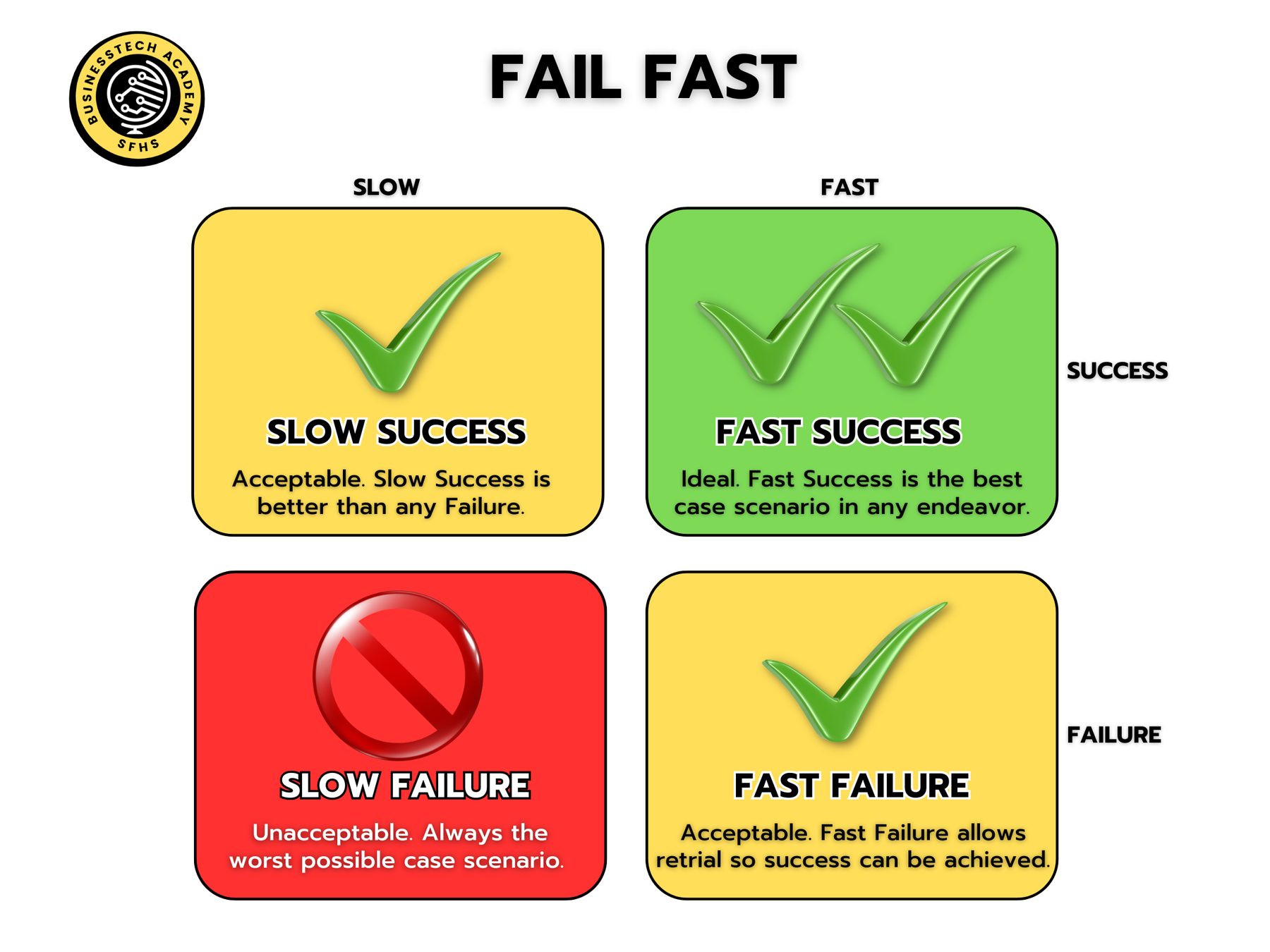
Three questions, asked of the work and not of the student.
No worksheets. Work is read the way it would be read outside, and you present and get questioned every cycle, not once a year at a showcase.
All three · The work stands.
What the work is
GIS is our information systems specialty.
Every information systems program picks something to go deep on. Ours is geographic information systems, and it runs through the middle and senior years as real analysis on real public data: the actual complaint data, on the actual map, with the actual gaps in it. Real data does not come clean. Learning that is most of the lesson.
A map is an argument. Someone chose the data, the scale, the classes and the colors.
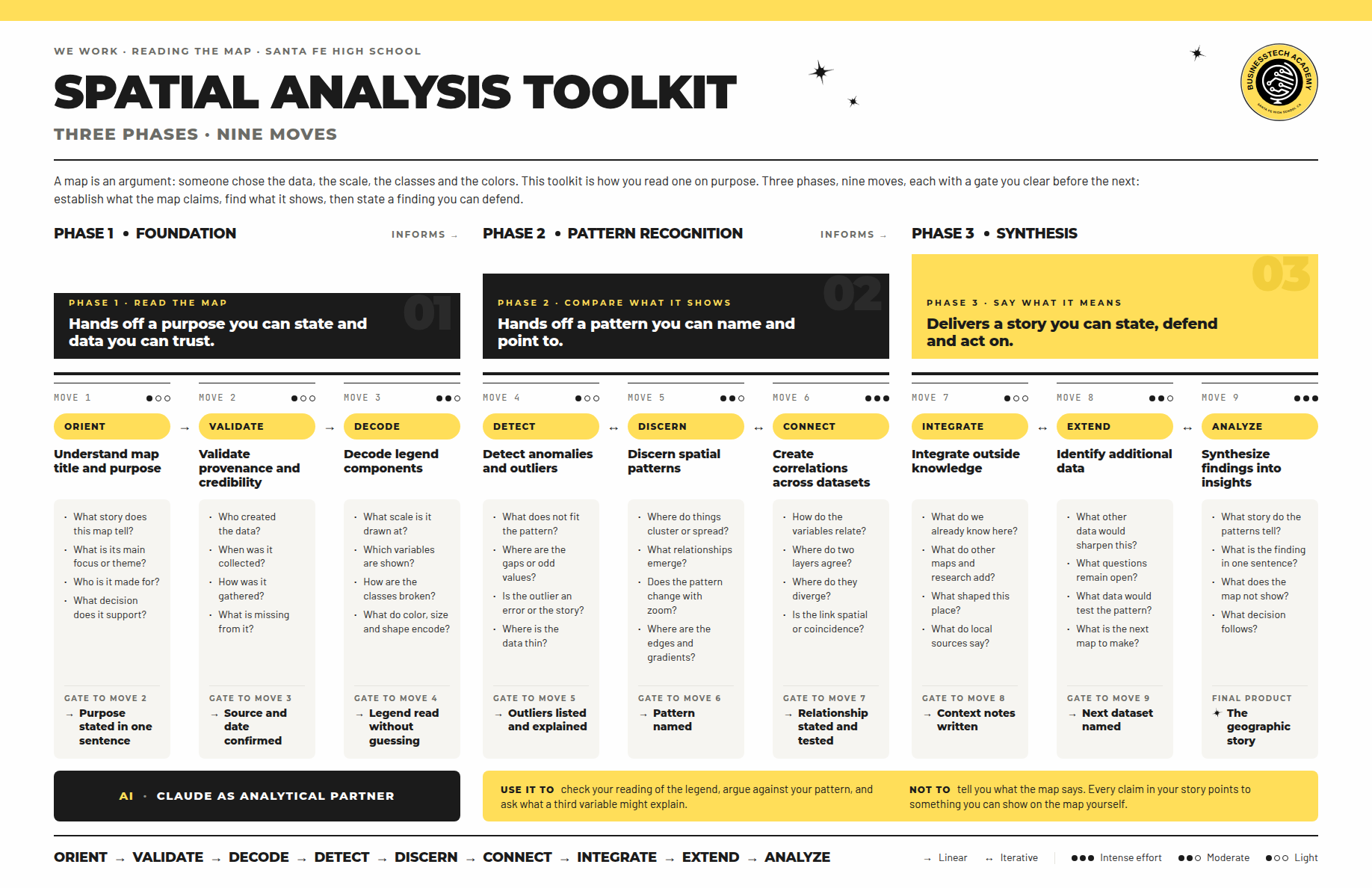
Fifteen counties. One site. No answer key.
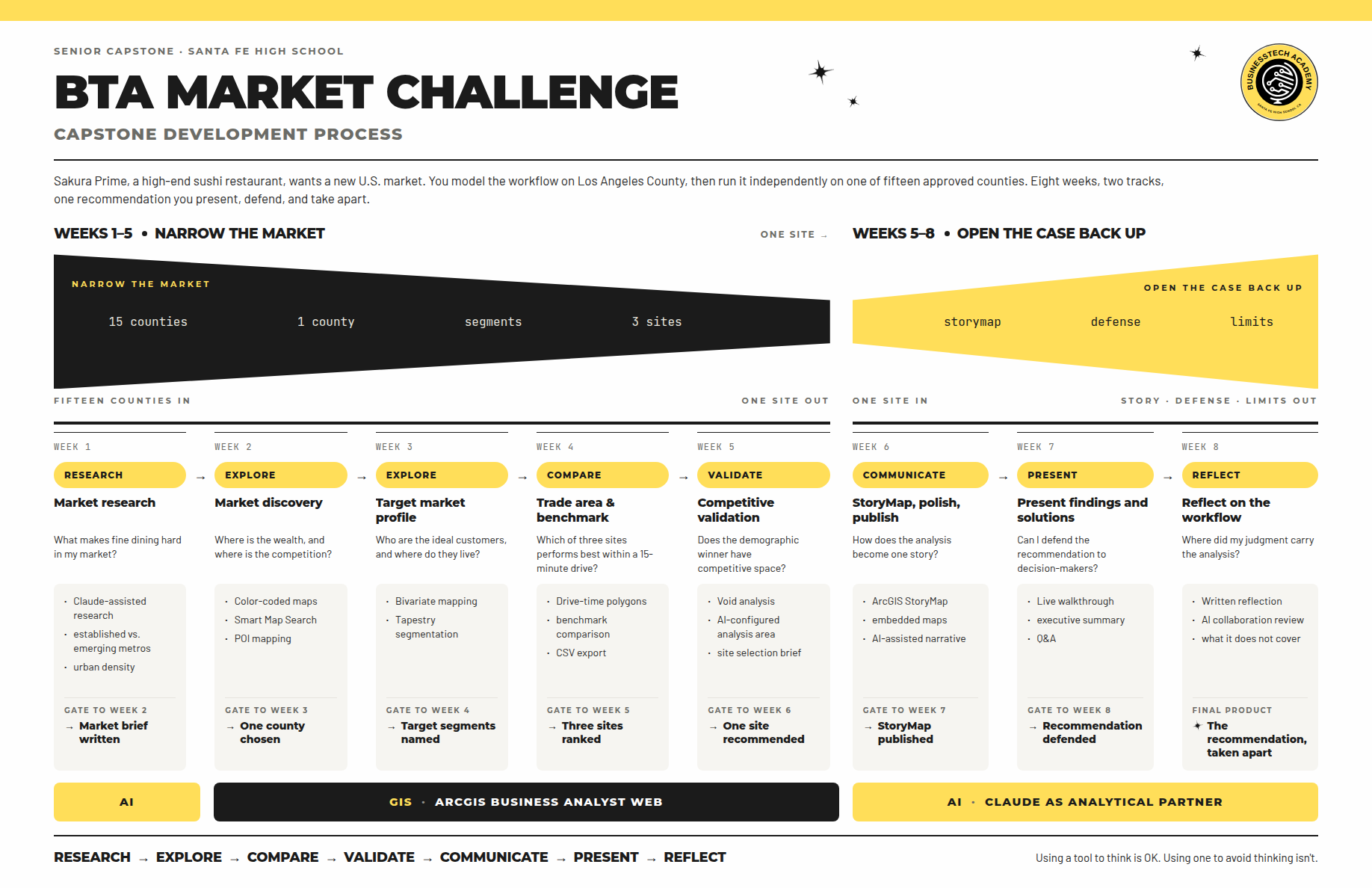
A real business wants a new U.S. market. You model the workflow on Los Angeles County, then run it yourself on one of fifteen approved counties. Nobody has run these counties before, so there is no answer key to grade against. The recommendation stands or falls on the evidence behind it, in front of people asking why.
Using a tool to think is OK. Using one to avoid thinking isn’t.
Everything on this page is written into the courses of study. Hold us to it.
No tests, critical thinking, data analysis, emotional literacy and the GIS specialty are not a teacher’s preferences. They are named in the district’s course descriptions, approved by the board in May 2024. Three courses, three documents, one line of argument.